Introducing the Lightfield API
Pete Nichols
A CRM has three types of users: humans, internal agents, and external systems/agents. Most CRMs treat these users differently. Humans get a UI. Internal agents operate through a bolt-on orchestration layer. External systems and agents get a limited API. None of them share the same interface.
Today, we’re beginning to open access to the API that powers Lightfield — the same API our agents use — to everyone.
Why design around a shared API
Separate pathways create a compounding problem. When you build a new capability for the UI, it doesn't automatically exist for agents or external systems. Every new feature becomes two or three projects. You spend engineering time keeping pathways in sync instead of building. And as agents take on more work — creating records, updating fields, drafting follow-ups — the gaps between what a human can do and what an agent can do become the manual tasks someone has to cover.
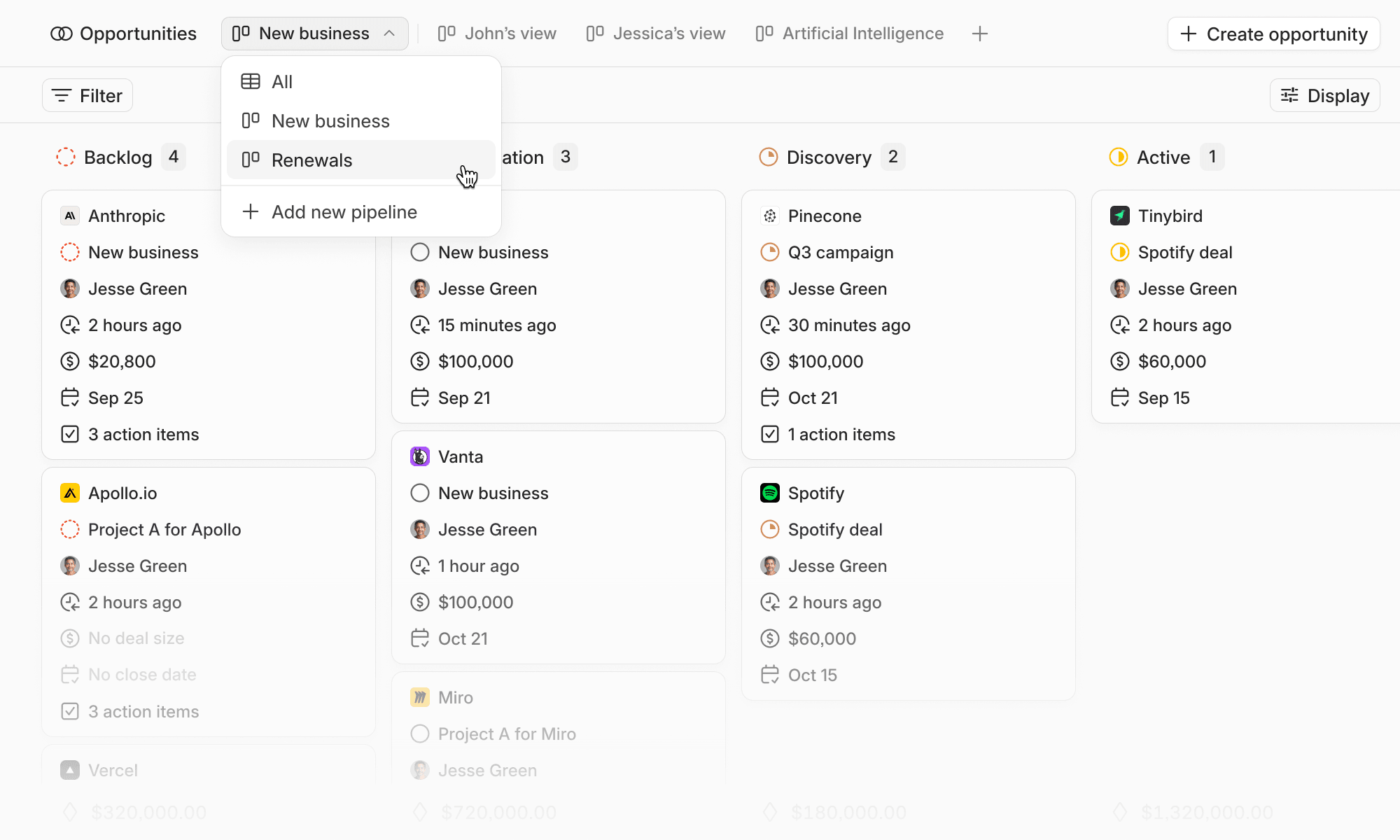
Lightfield’s agents read and write to the same CRM objects a human does - accounts, contacts, opportunities, fields, relationships. They aren’t just assistants that sit alongside the CRM; they are users of it.
That’s why we architected Lightfield so that every interaction — whether it's a human in the UI, an agent updating an opportunity after a call, or an external system syncing data — works with a shared set of tools, objects, and primitives.
What a shared API unlocks
When agents, humans, and external systems share a common core, the integrations you build work with the full CRM, not a subset of it.
Your prospecting tool can write accounts and contacts into Lightfield through the same pathway our agent uses to create them from email conversations. The records look identical because they are — same fields, same enrichment, same relationships. There's no "imported via API" record that's missing context a "real" record would have.
And if you're building your own agents — or using off-the-shelf ones — they interact with Lightfield through the same interface ours do. They can use the same endpoints and the same data structures to build context. Your agents aren't second-class users of the system. They're peers of ours.
What's available today, and what's coming soon
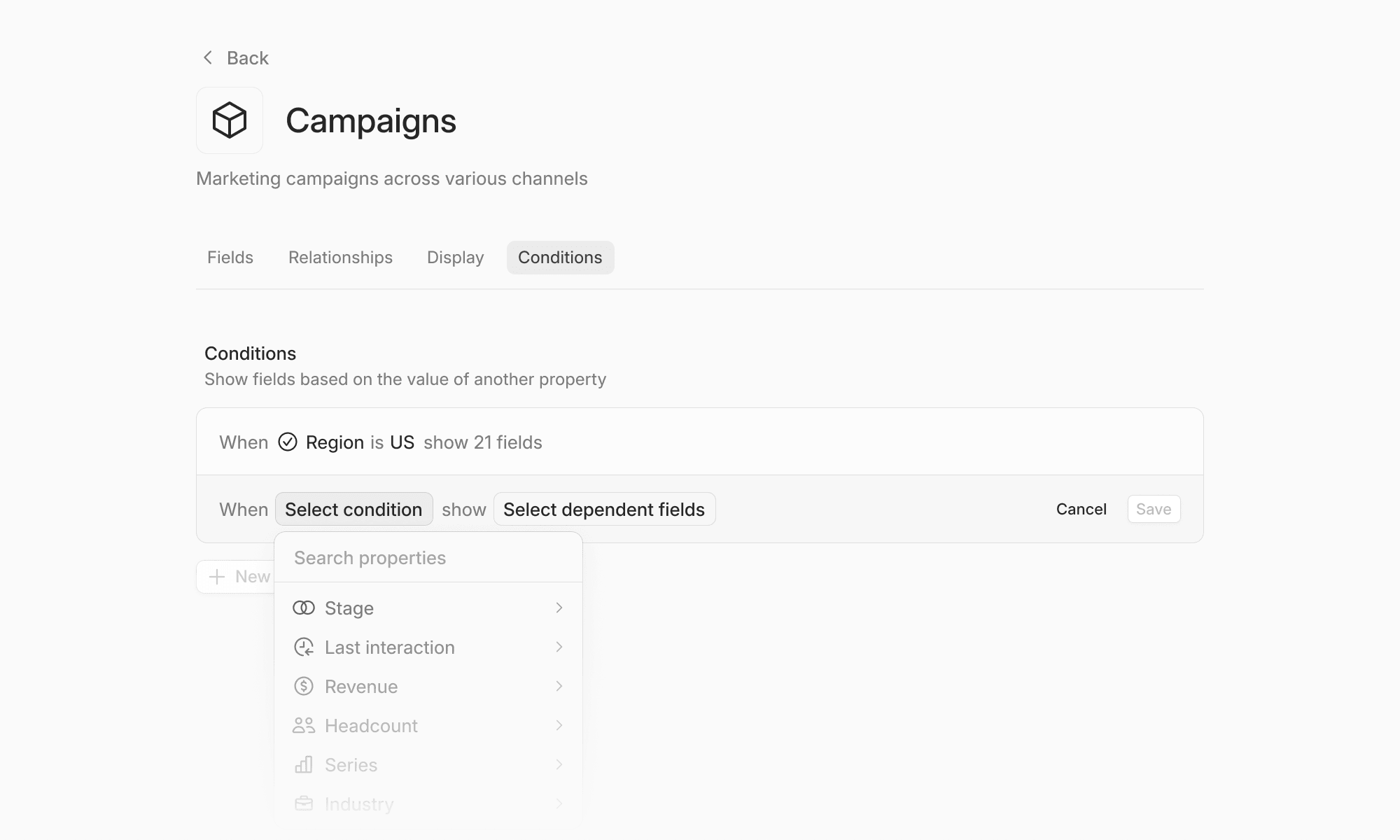
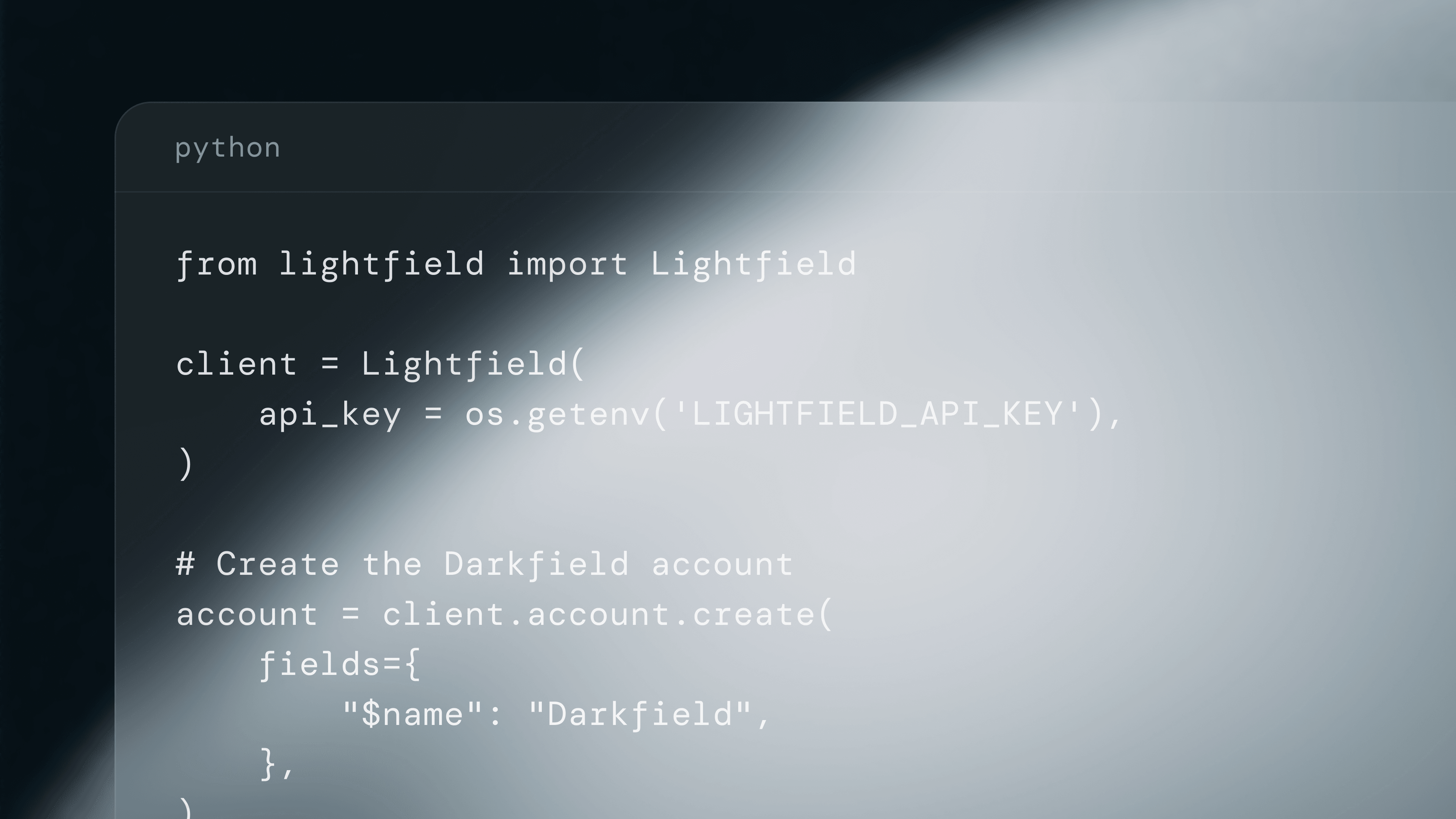
Our API is now available. To start, it provides access to core CRM objects - Accounts, Opportunities, and Contacts, with read / write access. In addition, we’re providing read access to the Member object. API access is available via HTTP or our Python SDK.
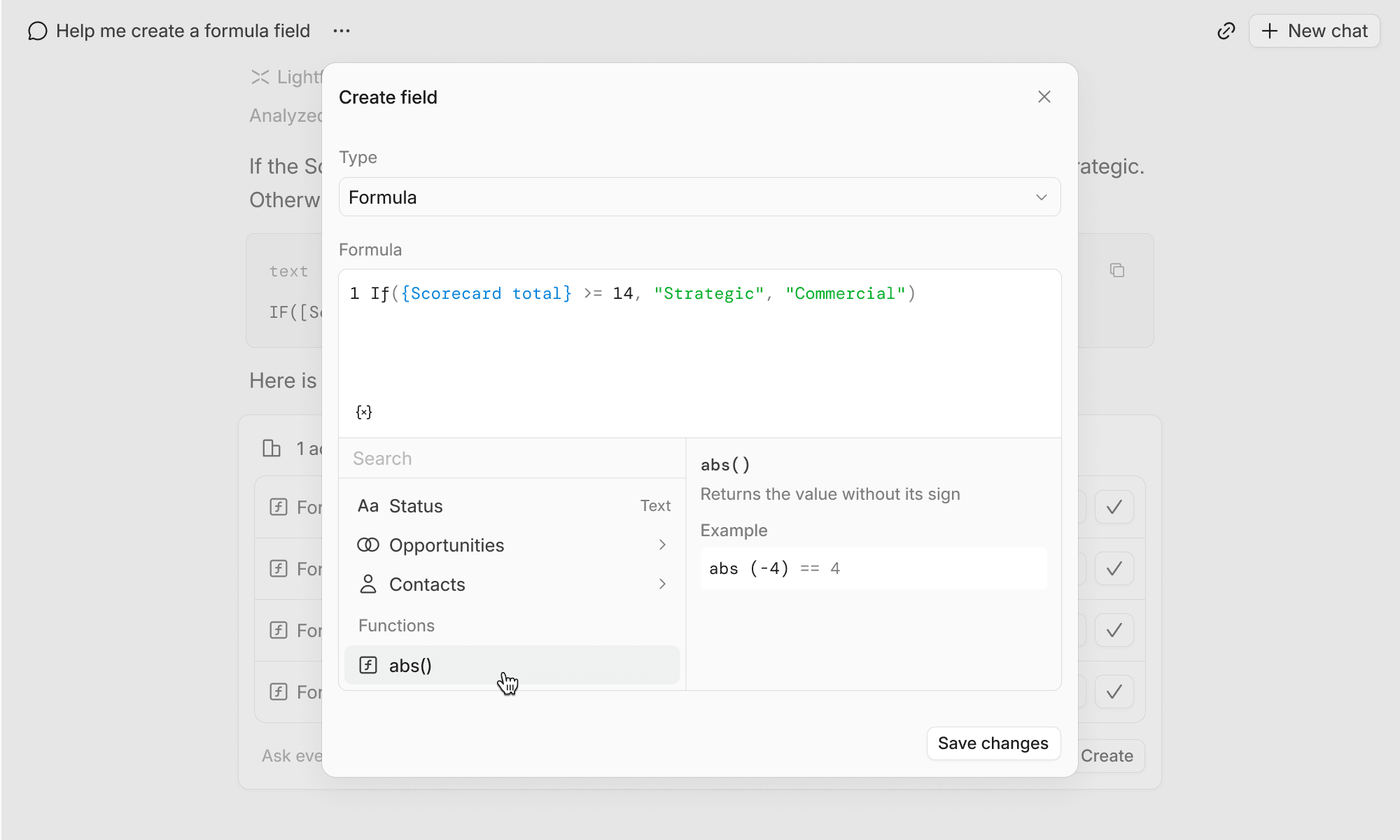
These are the same objects, with the same field system, that power the rest of Lightfield — including the custom fields you’ve added to describe your business.
Here's what's next on the roadmap:
- Notes, Meetings, and Tasks - rounding out access to every core object in Lightfield.
- TypeScript SDK and a command line interface.
- MCP server, enabling your agents to interact with Lightfield data through tools.
Open by default
Our architecture reflects our philosophy on how customers should be able to work with CRM data. A shared API means there's no version of your data we have access to that you don't.
The interactions, context, decisions, and results that define your business should be accessible to whatever workflows, tools, or ideas you want to bring to life. Sometimes the best thing for you is to work inside Lightfield. Sometimes it's in another app. Sometimes it's in something you build yourself.
This is how we'll continue to build. Going forward, every new capability in Lightfield ships with API support from day one.
Everything you need to get started is at docs.lightfield.app.