Here Are the 15 Best HubSpot CRM Alternatives
Matt Serna
Quick Summary
HubSpot CRM does a lot. For most teams, that's the problem.
Founders tell us the same thing: they're paying for marketing automation, service ticketing, and content management they never touch — while the features they actually need (pipeline visibility, conversation tracking, less manual entry) get buried under tabs they'll never open. One founder put it bluntly: "I'm not paying HubSpot $1,000 a month to create more work for me."
The teams switching away from HubSpot aren't switching because it's bad. They're switching because it's built for a different company — one with a RevOps team to maintain it.
Here are our top three alternatives:
| Tool | Why Choose Over HubSpot | Starting Price |
|---|---|---|
Lightfield | AI agent auto-captures emails, calls, and meetings, uses that to understand your business and automate work for you. | $89/user/month |
ActiveCampaign | AI generates complete campaign sequences from natural language prompts. | $15/month |
Freshsales | Simpler interface. Lower setup overhead for SMB sales teams. | $9/user/month |
Finding the Right CRM for Your Sales Process
This guide covers 15 HubSpot CRM alternatives for teams who need pipeline management without the bundled complexity. Each tool is evaluated on key features, tradeoffs, and pricing. For teams who want a CRM that updates itself and does work for you, Lightfield auto-captures emails, calls, and meetings without manual data entry.
Why Look for HubSpot CRM Alternatives?
The feature bloat problem. Teams doing founder-led sales use maybe 10% of HubSpot. The rest is tabs they'll never open. As one prospect told us: "It looks a lot neater compared to what we have in HubSpot. So many tabs and a lot of things to worry about." A partnerships lead at a well-known media company said the same thing: "We're not using all the features that HubSpot really offers right now... we're looking for something a little bit more lightweight."
The data entry tax. The promise of a CRM is visibility. The reality of HubSpot is that you get visibility only if someone manually updates every deal, every call, every note. One founder canceled HubSpot entirely: "Do you just have to set aside time to upkeep your CRM? I don't have time for this." Another said simply: "I hate using my CRM. I don't have time in the day to do it."
The pricing treadmill. HubSpot's pricing is contact-based — as your database grows, costs increase. Most AI and automation features are locked behind higher tiers. Teams consistently tell us they're paying for capabilities they don't use and want something "lighter weight, easier to use, a little less expensive."
AI that doesn't change the workflow. HubSpot is adding AI features, but the underlying data model still assumes manual entry. One founder tried HubSpot's ChatGPT integration and found it underwhelming in practice — cool demo, didn't stick. The AI assists, but the daily grind of logging activities, updating fields, and maintaining records hasn't gone away.
If you want a CRM that fits your sales process without paying for unused marketing tools, here are 15 options across different price points and team sizes.
15 Best HubSpot CRM Alternatives
| Tool | Best For | Starting Price |
|---|---|---|
Lightfield | Venture-backed startups | $89/user/month |
ActiveCampaign | Small to mid-sized businesses | $15/month |
Freshsales | Small to mid-sized businesses | $9/user/month |
Zoho CRM | Small businesses to enterprises | $14/user/month |
EngageBay | Small to mid-sized businesses | $14.99/user/month |
Salesforce | Startups to Fortune 500 | $25/user/month |
Pipedrive | Small to mid-sized businesses | $14/user/month |
Keap | Small service businesses | $299/month |
Insightly | Small to mid-sized businesses | $29/user/month |
Ontraport | Small to mid-sized businesses | $83/month |
Mailchimp | Small to mid-sized businesses | $13/month |
Nutshell | Small to mid-sized businesses | $13/user/month |
Brevo | Small to mid-sized businesses | $8.08/month |
Drip | Ecommerce businesses | $39/month |
Monday CRM | Teams of all sizes | $12/seat/month |
1. Lightfield — Best for: Venture-backed startups
What it is
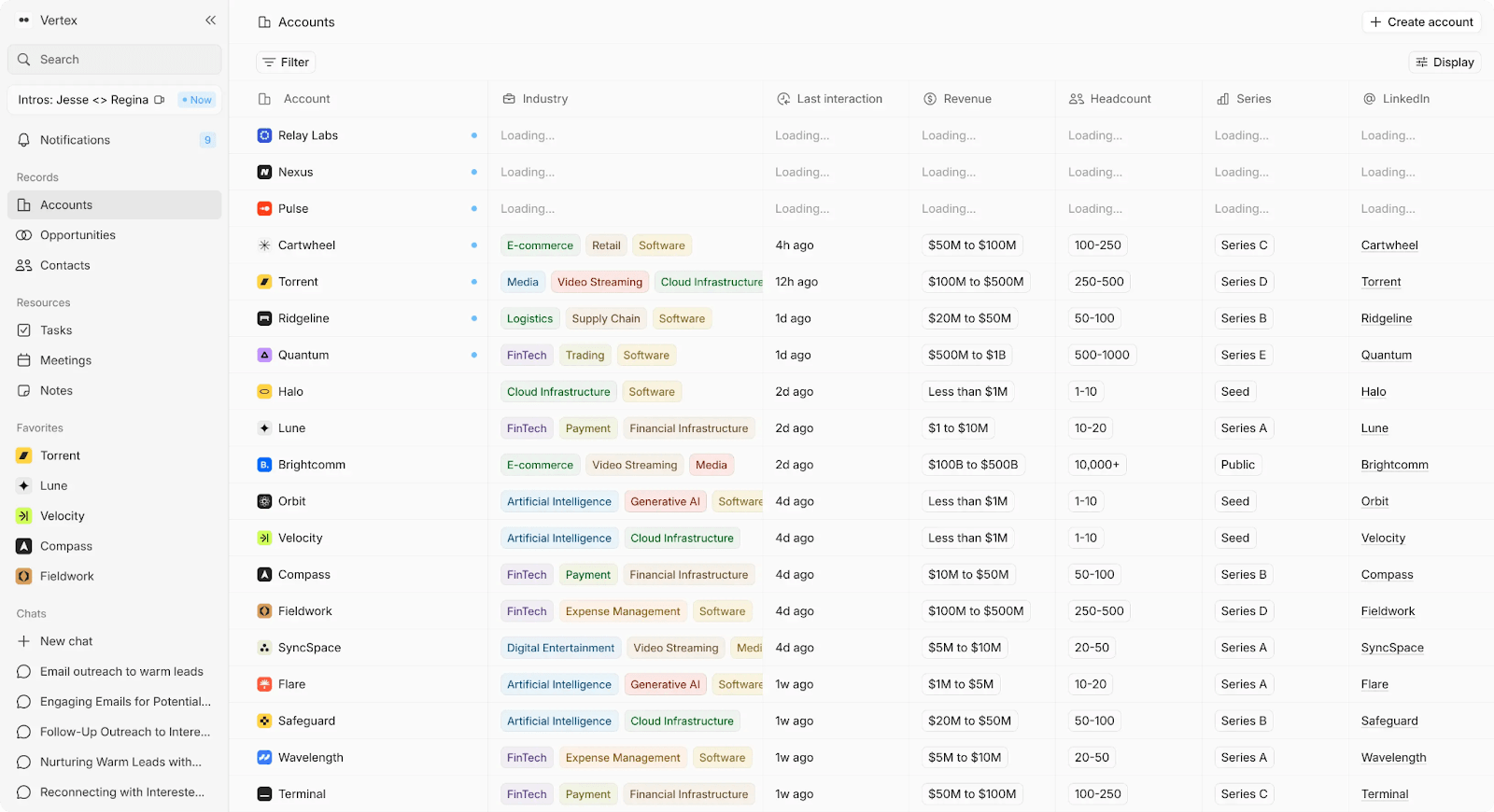
AI-native CRM that auto-captures conversations to understand your business and automate work.
Most CRMs bolt AI onto architectures designed around manual data entry. The AI assists, but the underlying workflow still assumes you'll type in updates yourself. HubSpot is no exception.
Lightfield is built differently. The system captures emails, calls, and meetings automatically and structures them into CRM data — no logging, no copy-paste, no setting aside time to upkeep your CRM. Custom fields get backfilled from months of prior interactions. The chat interface answers GTM questions with citations to specific emails and call moments.
This matters because the #1 complaint we hear from HubSpot users isn't about any single feature. It's the workflow tax. Teams end up with a CRM that's technically full-featured but practically empty, because nobody has bandwidth to keep it current. One founder described HubSpot as "disappointing that it's not better" while acknowledging it "does everything fine" — the problem is that "fine" still requires hours of manual upkeep.
Key Features
- Auto-captures email, calendar, and meeting data to create and update accounts, contacts, and opportunities
- Integrated call recorder replaces Fathom, Fireflies, Granola
- Chat interface answers natural language questions with citations to specific emails or call moments
- Backfills custom fields from months of prior conversations
- Drafts personalized outbound emails using prospect language from past interactions
- Generates tasks from meeting conversations
Tradeoffs
- Newer platform with smaller integration ecosystem
Pricing
Starter
$89/user/month, up to 3 users. 14-day free trial.
Larger teams doing more complex agentic work can move to a team plan with unlimited viewer seats.
Pro
Visit lightfield.app/pricing for details.
Growth
Visit lightfield.app/pricing for details.
Best for
Post-revenue venture-backed startups running 10+ meetings per week.
Bottom line
Built for teams who want the most advanced AI to help run their go-to-market.
2. ActiveCampaign — Best for: Marketing-led SMB sales teams
What it is
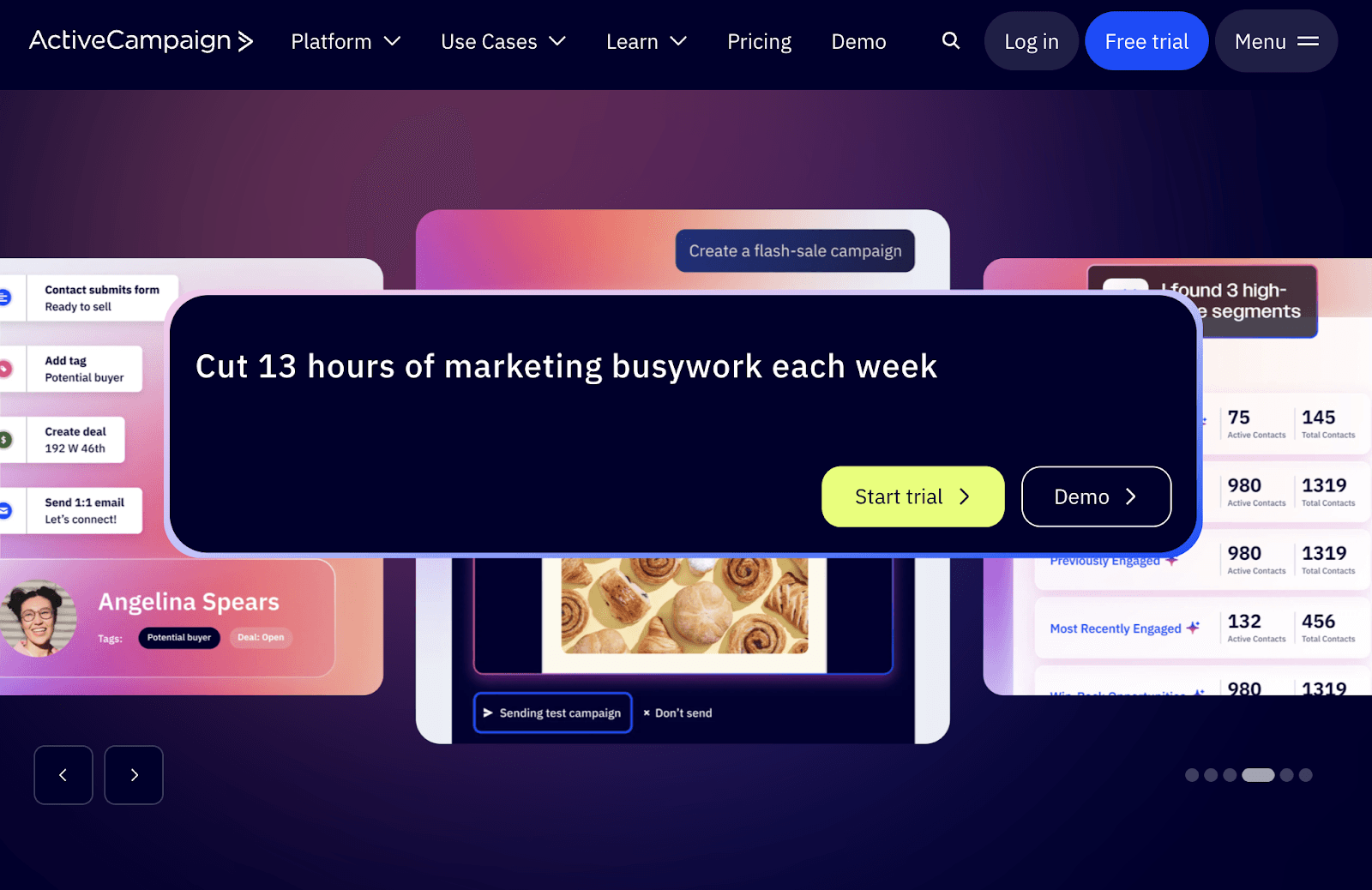
Marketing automation platform with CRM features added.
Key Features
- Generates complete campaign sequences from natural language prompts
- Predictive send-time optimization
- Win probability scoring on deals
- Visual automation builder with conditional logic and A/B split testing
- Site tracking triggers automations based on page visits and time-on-page
Tradeoffs
- Pipeline features are shallow compared to sales-first CRMs
- Reporting is campaign-focused, not deal-focused
Pricing
Starts at $15/month, billed annually (as of October 2026)
Best for
SMBs running email-heavy sales processes.
Bottom line
Strong for email sequence automation. Less useful for call-heavy or meeting-heavy sales motions.
3. Freshsales — Best for: SMB sales teams
What it is
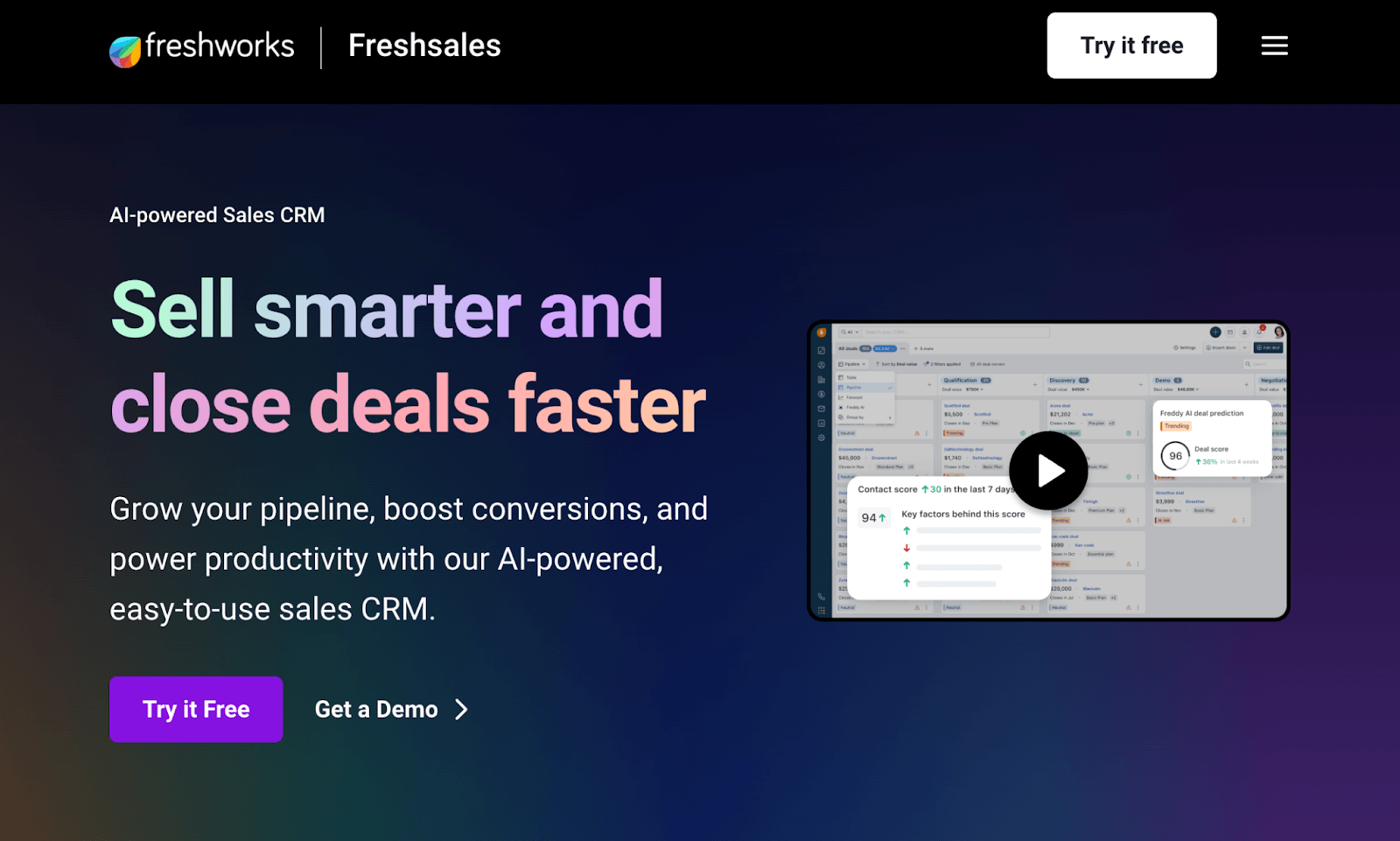
Sales CRM with Kanban pipeline and AI-powered lead scoring.
Key Features
- Lead scoring based on engagement and fit signals
- Conversion likelihood forecasting
- Best-time-to-contact recommendations
- Email drafting and contact journey summaries
- Next-step suggestions based on deal stage
Tradeoffs
- Report customization is limited compared to HubSpot or Salesforce
- AI features are assistive, not autonomous
Pricing
Starts at $9/user/month, billed annually (as of October 2026)
Best for
SMB sales teams who want visual pipeline management without enterprise complexity.
Bottom line
Lower setup overhead than HubSpot. AI handles scoring and recommendations; you still manage the pipeline.
4. Zoho CRM — Best for: Teams with unique workflows
What it is
Highly customizable CRM with deep Zoho ecosystem integration.
Key Features
- Zia AI for predictive analytics and anomaly detection
- Voice and text queries for retrieving customer data
- Auto-fills missing contact details from web sources
- Best-time-to-contact predictions
- Drag-and-drop builder for custom page layouts, fields, and modules
- Blueprint process management for standardizing sales workflows
Tradeoffs
- Learning curve is steeper than simpler CRMs
- Full functionality requires multiple Zoho products
Pricing
Starts at $14/user/month (as of October 2026)
Best for
Businesses with unique workflows who need deep customization without writing code.
Bottom line
High customization ceiling. Works best if you commit to the broader Zoho ecosystem.
5. EngageBay — Best for: Budget-conscious SMBs
What it is
All-in-one CRM with marketing, sales, and service tools.
Key Features
- AI-powered email and campaign generation
- Deal scoring
- Lead scoring (rule-based, not predictive)
- Visual sales pipelines with drag-and-drop deal management
- Built-in telephony with call logging and recordings
Tradeoffs
- AI is additive, not foundational
- Automation depth is limited compared to ActiveCampaign
Pricing
Starts at $14.99/user/month ($13.79 billed annually); free plan available (as of October 2026)
Best for
SMBs who want HubSpot-style features without HubSpot pricing.
Bottom line
Budget-friendly with solid basics. Don't expect advanced AI or deep automation.
6. Salesforce — Best for: Mid-market to enterprise teams
What it is
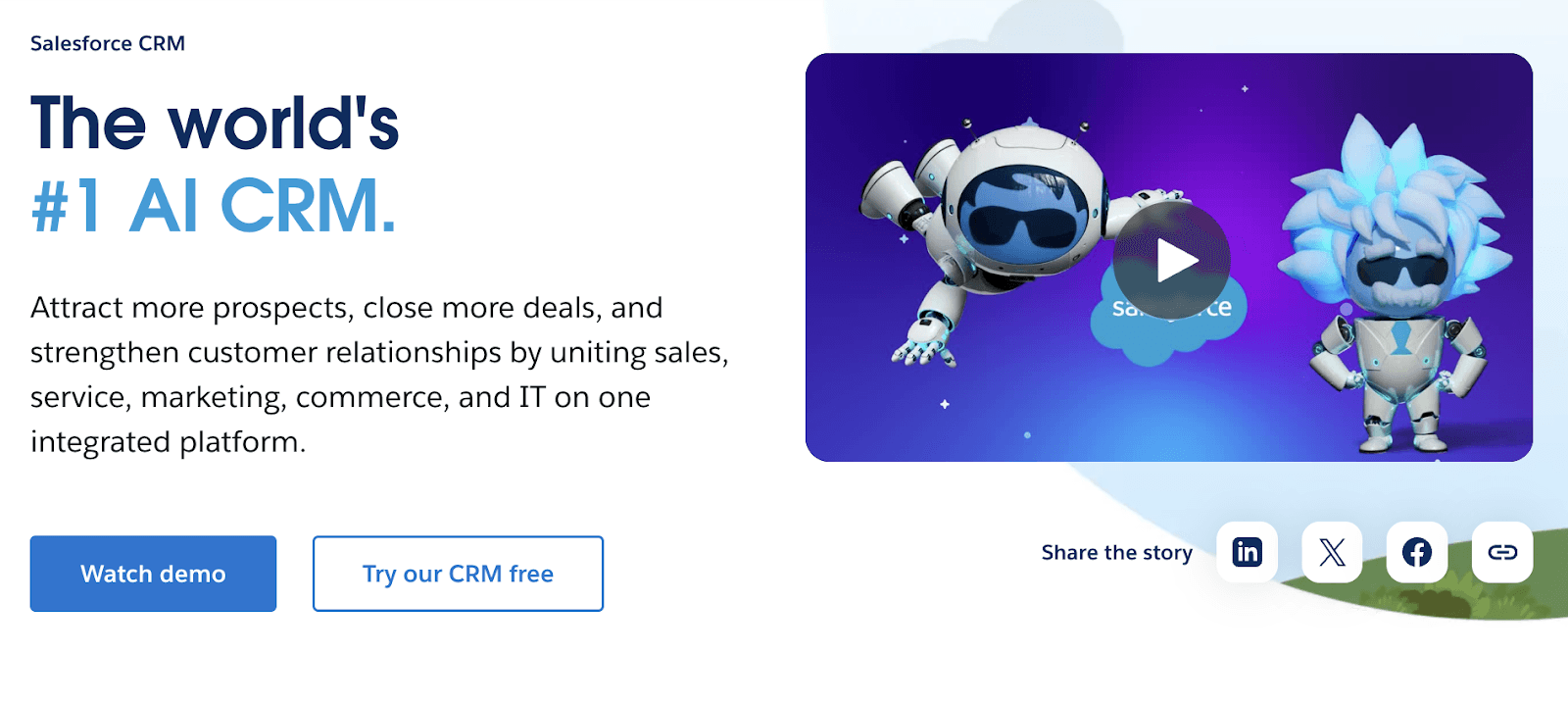
Enterprise CRM platform with extensive customization and 7,000+ integrations.
Key Features
- Built-in AI and Agentforce for scoring, forecasting, recommendations
- Natural language interaction
- Call recording and analysis with searchable transcripts
- LLM Open Connector for plugging in custom language models
- Customer 360 database shared across all Salesforce products
Tradeoffs
- Setup complexity is high
- Cost scales quickly with users and features
- Requires dedicated admin for most implementations
Pricing
Starts at $25/user/month (as of October 2026)
Best for
Mid-market to enterprise teams who need a unified platform across departments and can invest in setup and administration.
Bottom line
Industry standard for enterprise. Overkill for founder-led teams without dedicated ops resources.
7. Pipedrive — Best for: Small sales teams
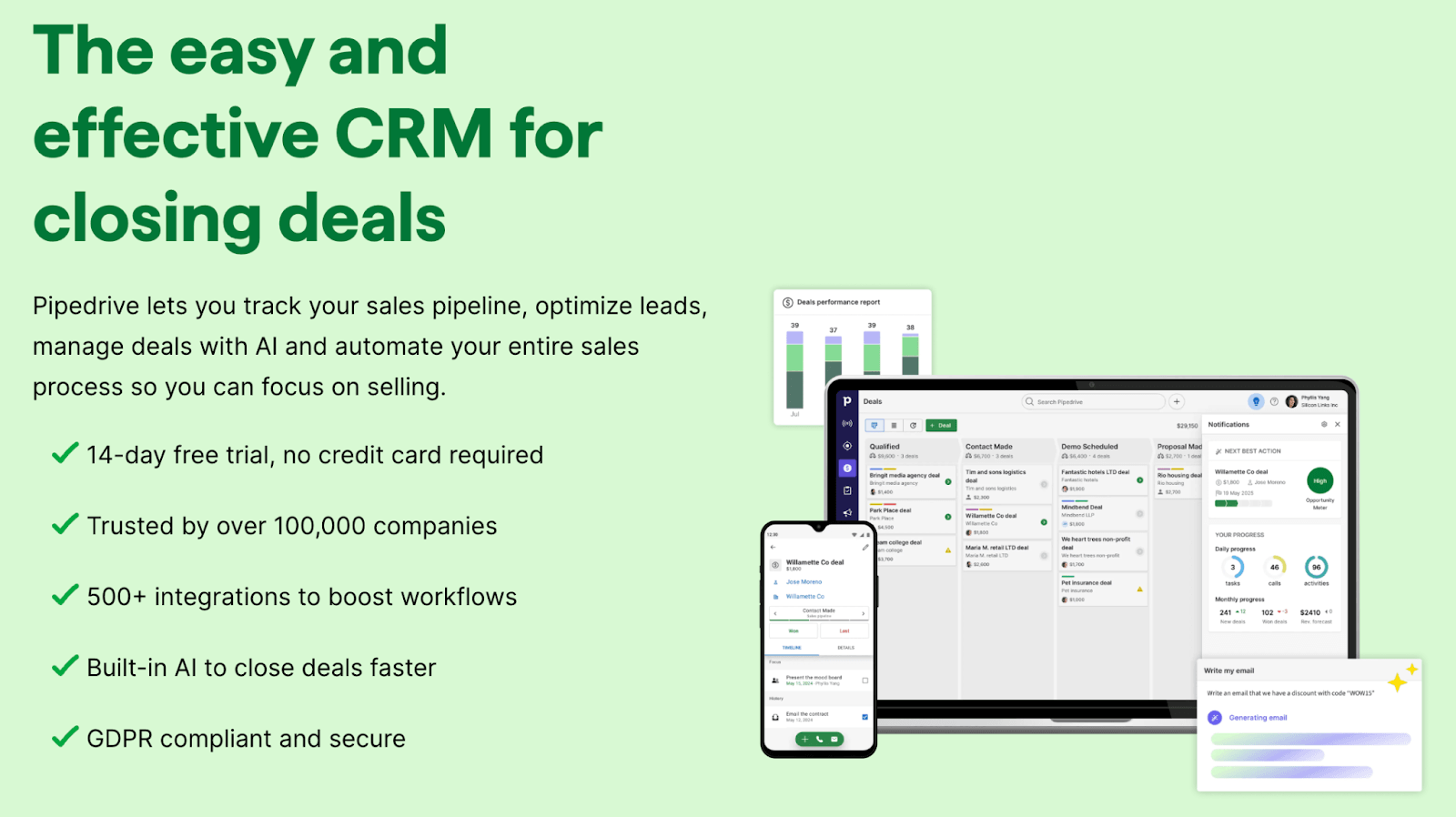
What it is
Sales-focused CRM built around visual pipeline management.
Key Features
- Visual Kanban-style pipeline with drag-and-drop deals
- Sales Assistant analyzes past deals and recommends actions
- Activity reminders for follow-ups
- Mobile app with offline capability and map view for field sales
- Customizable pipelines and custom fields
Tradeoffs
- AI is limited to recommendations (no content generation)
- Marketing automation is basic
Pricing
Starts at $14/user/month, billed annually (as of October 2026)
Best for
Small sales teams who want visual pipeline management without complexity.
Bottom line
Clean interface for teams focused on pipeline velocity. Not built for marketing-heavy workflows.
8. Keap — Best for: Small service businesses
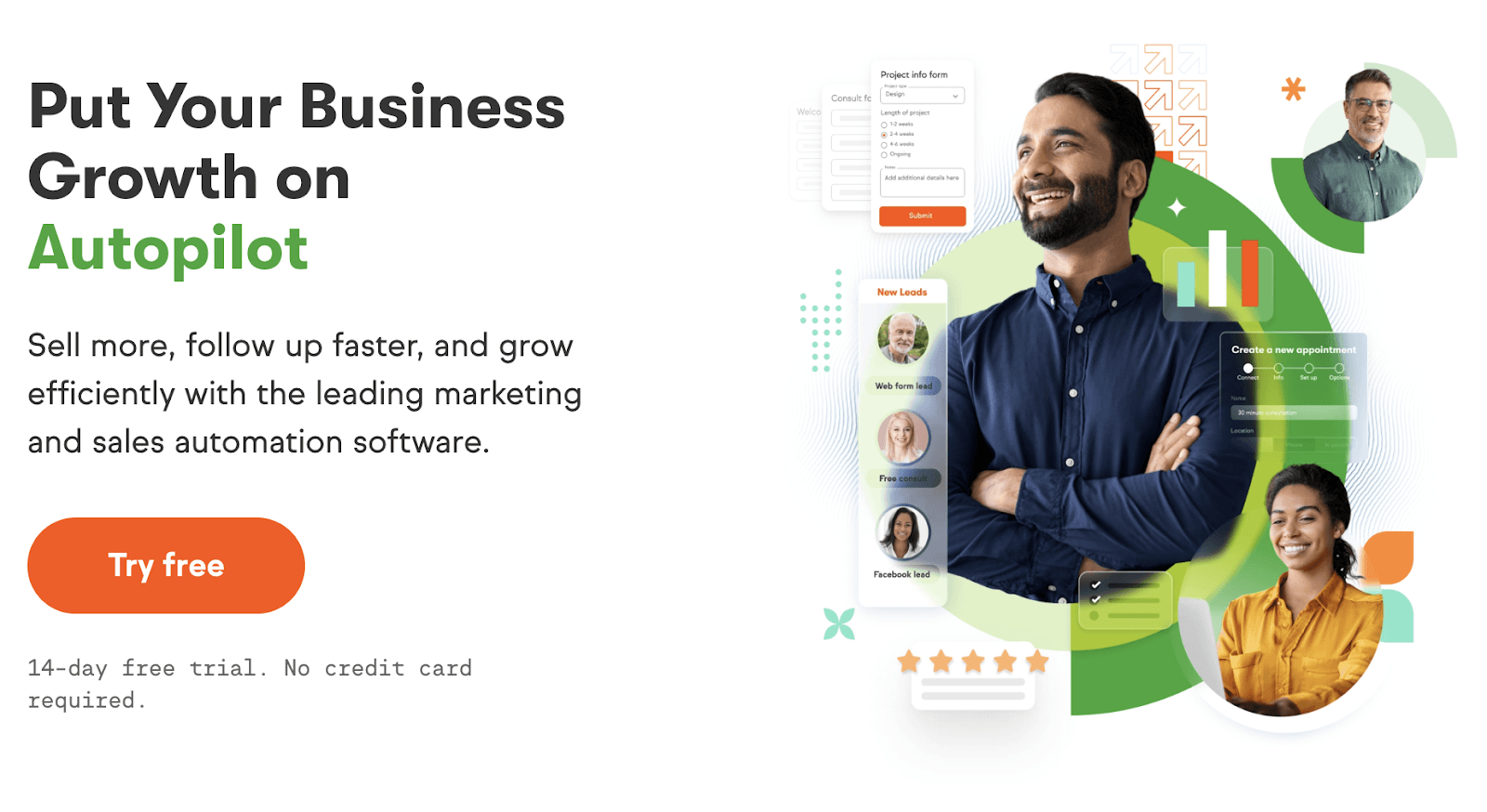
What it is
CRM for service businesses with built-in e-commerce and scheduling.
Key Features
- Visual automation builder with conditional logic and delay timers
- Built-in payment processing, invoicing, and quote management
- Appointment scheduling with calendar integration
- Built-in SMS messaging for one-off texts and automated sequences
- Lead scoring (rule-based) with automation triggers based on thresholds
Tradeoffs
- Higher price point ($299/month starting)
- Lead scoring is rule-based, not AI-driven
Pricing
Starts at $299/month (as of October 2026)
Best for
Service businesses (consultants, coaches, agencies) who need CRM + payments + scheduling in one system.
Bottom line
All-in-one for service businesses. Price reflects bundled functionality.
9. Insightly — Best for: Teams spanning sales and delivery
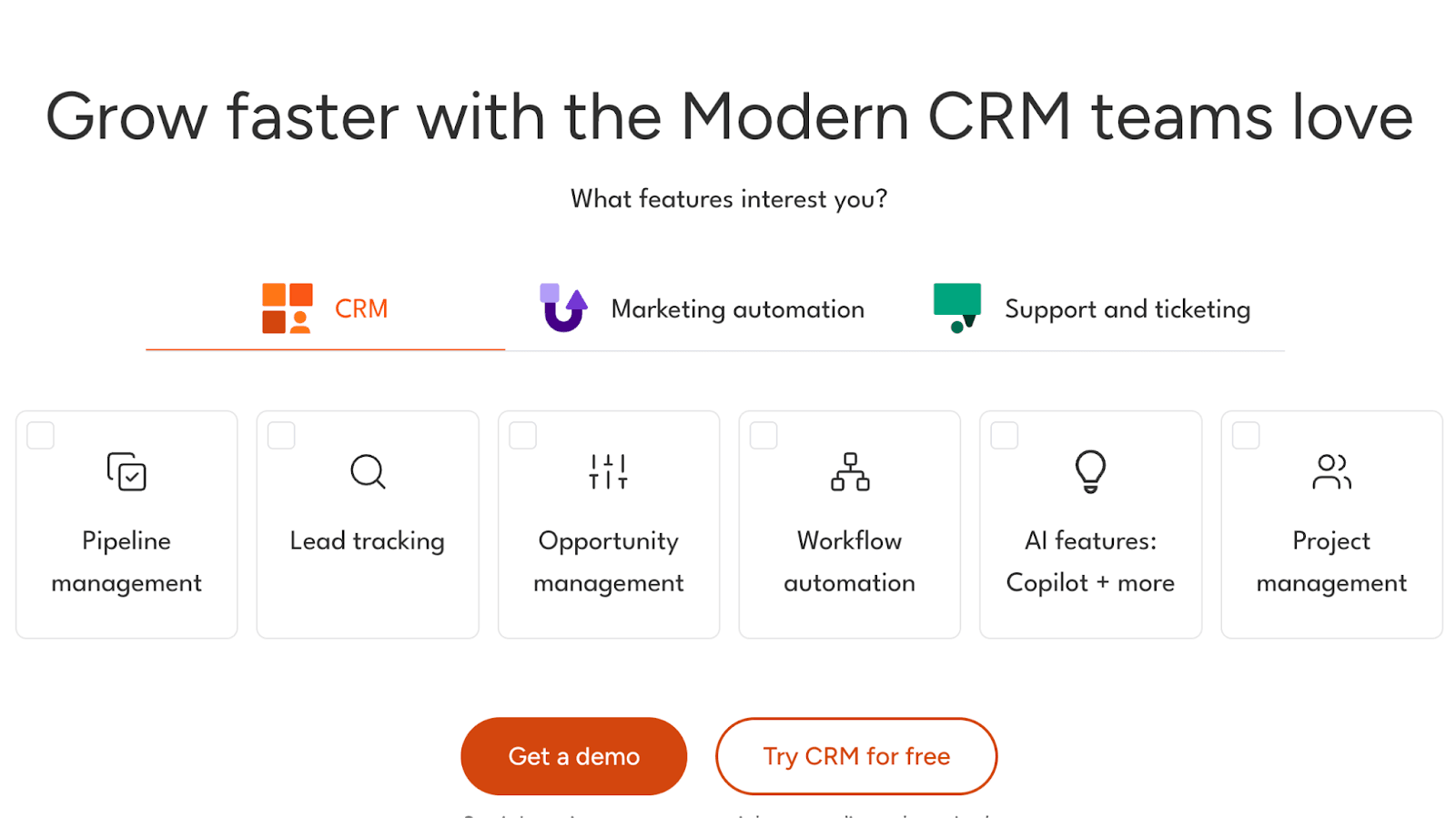
What it is
CRM with integrated project management.
Key Features
- Convert closed deals directly into projects with tasks and deadlines
- Conversational AI assistant for natural language queries
- Email summarization and reply generation
- Contact records with complete activity timeline
- Quote generation and mobile app with business card scanning
Tradeoffs
- CRM features are less deep than sales-focused alternatives
- Project management is basic compared to dedicated tools
Pricing
Starts at $29/user/month, billed annually (as of October 2026)
Best for
Teams whose sales process continues into delivery (agencies, consultancies, custom services).
Bottom line
Useful if your workflow spans sales and project delivery. Less competitive as a pure sales CRM.
10. Ontraport — Best for: Course creators and membership businesses
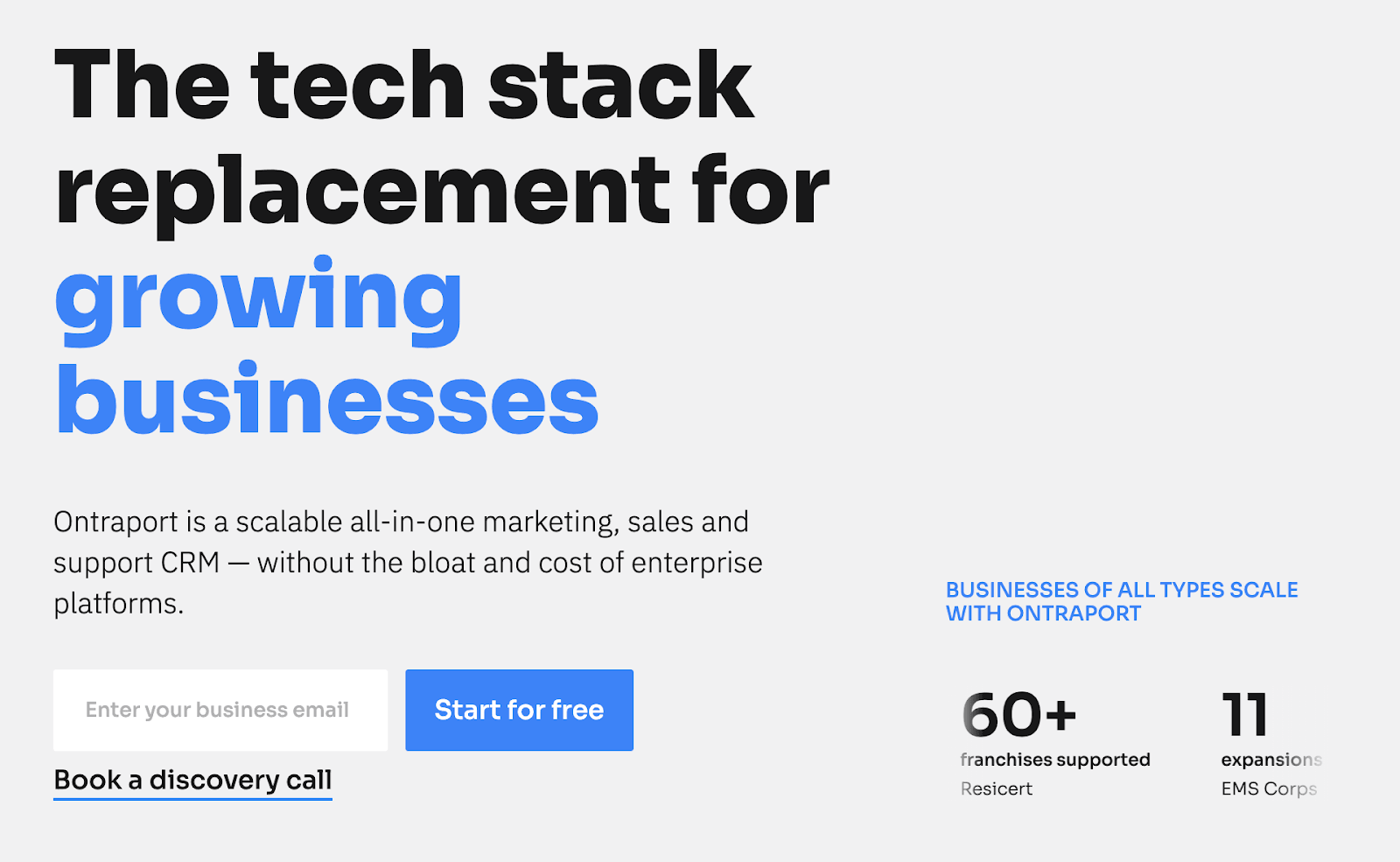
What it is
Marketing automation and CRM with membership site functionality.
Key Features
- Visual campaign builder with behavior-triggered sequences
- Lead scoring and routing
- Built-in membership management for websites
- Payment processing and subscription handling
- Support for custom record types (events, attendees, students, etc.)
Tradeoffs
- Landing page builder is basic compared to dedicated tools
- Interface can feel dated
Pricing
Starts at $83/month, billed annually (as of October 2026)
Best for
Businesses running coaching programs, courses, or subscription services.
Bottom line
Combines CRM with membership management. Less relevant for pure B2B sales teams.
11. Mailchimp — Best for: Email-first marketing teams
What it is
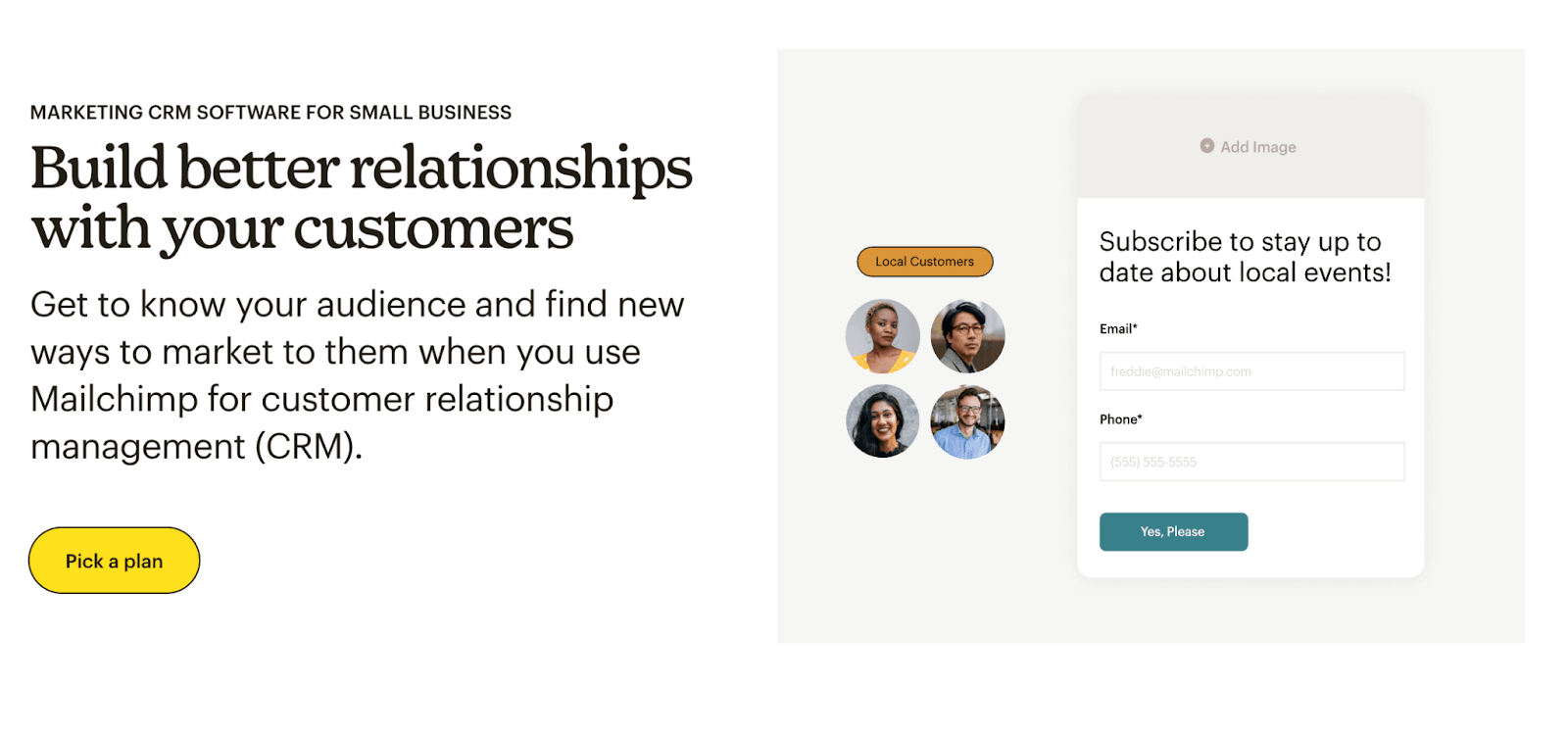
Email marketing platform with audience management features.
Key Features
- Drag-and-drop email builder with templates
- Generative AI for drafting email copy
- Send time and send day optimization
- Audience segmentation by location, behavior, or purchase history
- A/B testing and automated drip campaigns
Tradeoffs
- No sales pipeline or deal tracking
- No quote or invoice generation
- No call logging
Pricing
Starts at $13/month for 500 contacts (Essentials); free plan up to 250 contacts (as of October 2026)
Best for
Marketing teams focused on email campaigns who need basic contact management.
Bottom line
Strong email marketing. Not a replacement for sales CRM functionality.
12. Nutshell — Best for: SMBs wanting CRM + marketing in one
What it is
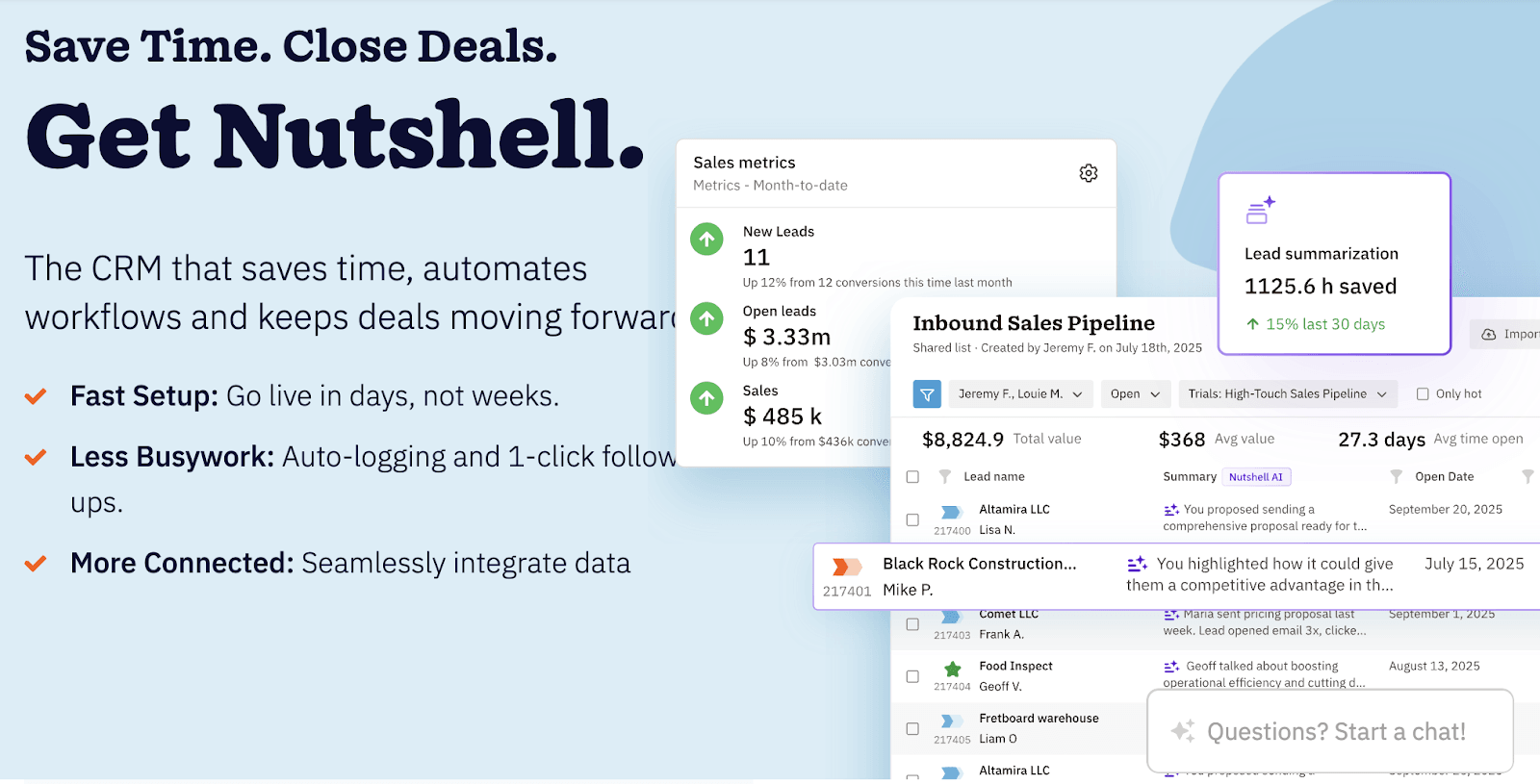
Sales CRM with built-in email marketing, SMS, and web forms.
Key Features
- Contact timeline summarization
- Call recording and transcription
- Voice-to-text across the CRM
- AI writing assistant for email drafts
- Automatic contact data enrichment
Tradeoffs
- Email marketing is less mature than Mailchimp
- Smaller integration ecosystem
Pricing
Starts at $13/user/month, billed annually (as of October 2026)
Best for
SMB sales teams who want CRM + basic marketing without enterprise complexity.
Bottom line
Solid mid-market option with AI summarization. Marketing tools are functional but basic.
13. Brevo — Best for: Multi-channel marketing teams
What it is
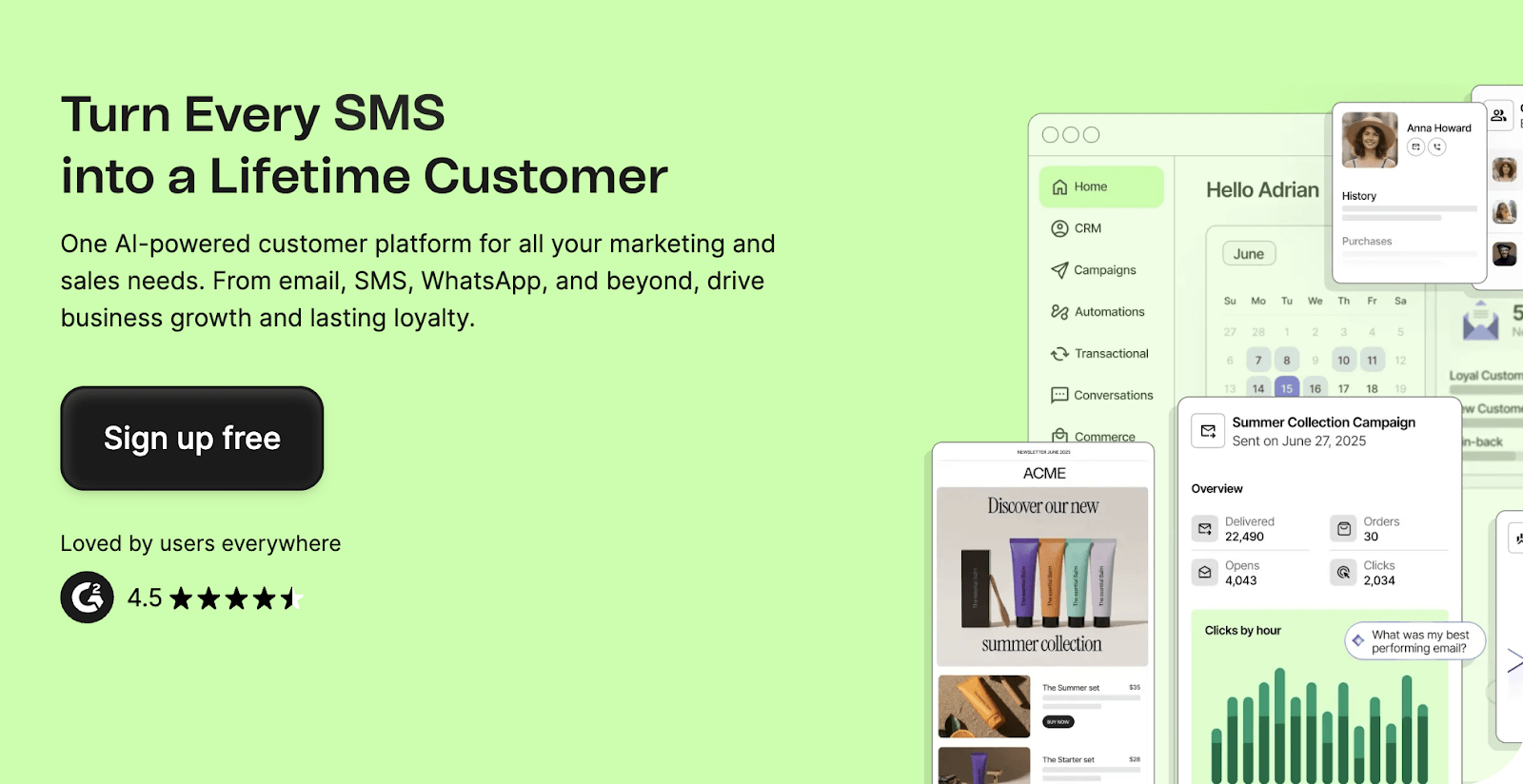
Marketing automation platform with lightweight CRM.
Key Features
- Email, SMS, WhatsApp, and web push campaigns
- Shared inbox for email, WhatsApp, Facebook, and Instagram messages
- Visual automation builder for welcome sequences and cart abandonment
- Integrated calling for international calls
- AI agents for marketing, sales, and customer conversations
Tradeoffs
- CRM features are lightweight
- Pipeline management is secondary to marketing automation
Pricing
Starts at $8.08/month, billed annually; free plan available (as of October 2026)
Best for
Marketing teams who need multi-channel campaigns with basic sales pipeline visibility.
Bottom line
Affordable multi-channel marketing with basic CRM attached. Not built for sales-led teams.
14. Drip — Best for: E-commerce businesses
What it is
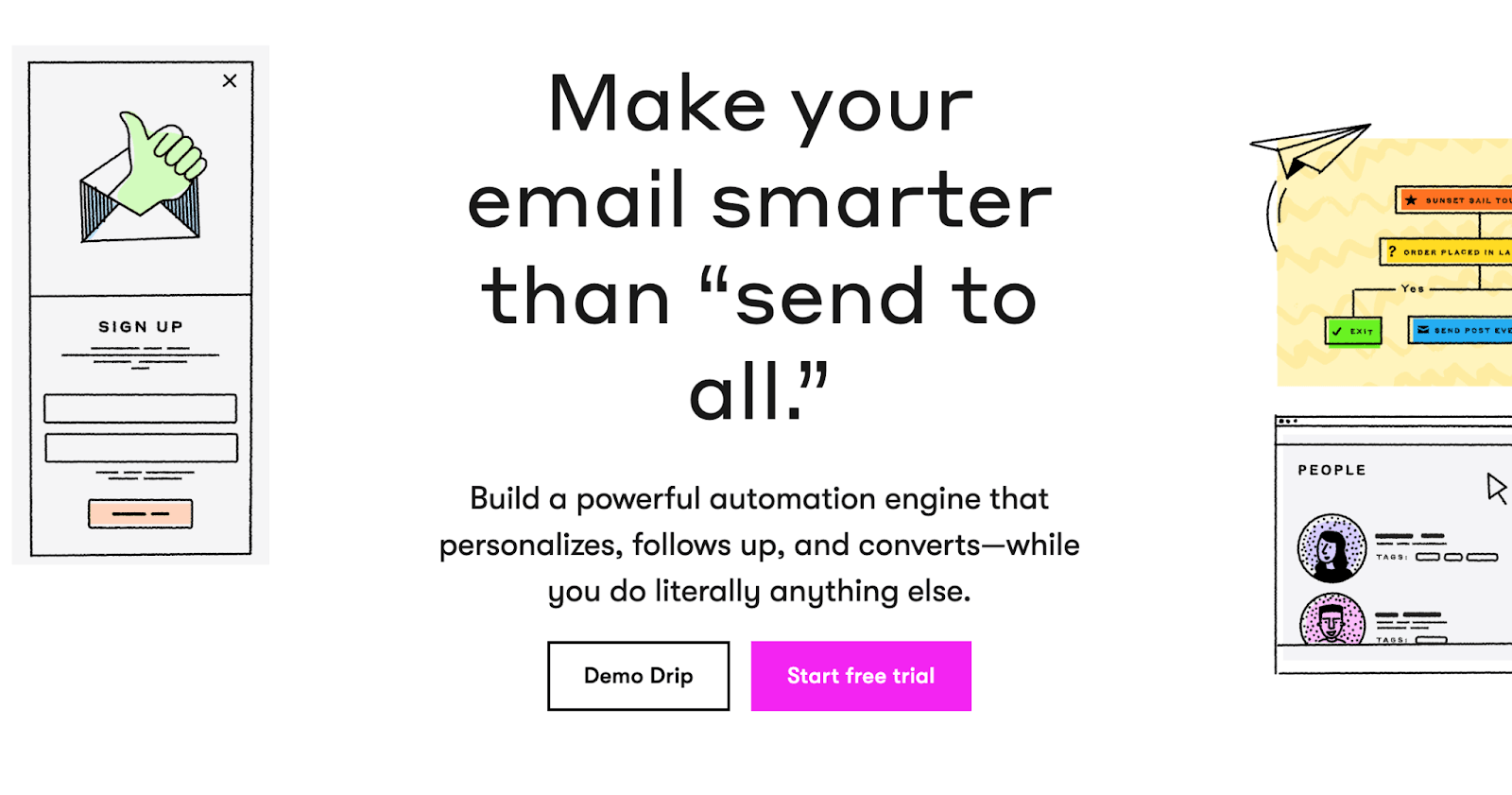
E-commerce marketing automation platform.
Key Features
- Behavior-triggered automation based on browse and purchase activity
- Dynamic audience segmentation that updates as behavior changes
- Product recommendation engine
- Native integrations with Shopify, WooCommerce, Magento, BigCommerce
- Revenue tracking per email and workflow
Tradeoffs
- No sales pipeline management
- Limited to e-commerce use cases
Pricing
Starts at $39/month for up to 2,500 people (as of October 2026)
Best for
Online stores that want behavior-triggered email and SMS automation.
Bottom line
Strong e-commerce automation. Not a HubSpot alternative for B2B sales teams.
15. Monday CRM — Best for: Teams already using Monday
What it is
Visual CRM built on Monday's project management infrastructure.
Key Features
- Multiple views: Kanban, timeline, Gantt charts
- AI-powered email composition and templates
- Automation for lead assignment, notifications, and status updates
- Cross-board connections for multi-department workflows
- 20+ chart types for custom dashboards
Tradeoffs
- Missing core CRM features (calling, territory management)
- Contact view requires toggling through tabs
Pricing
Starts at $12/seat/month, billed annually (as of October 2026)
Best for
Teams already using Monday for project management who want CRM in the same interface.
Bottom line
Works if you're committed to the Monday ecosystem. Not built as a sales-first CRM.
Pick the Right HubSpot CRM Alternative
The teams switching off HubSpot aren't looking for more features. They're looking for less friction. They want pipeline visibility without the maintenance overhead, conversation history without manual logging, and a CRM that earns its cost every week — not just during the annual renewal justification.
Lightfield captures conversations automatically and structures them into CRM data. Custom fields get backfilled from months of prior interactions. The chat interface answers GTM questions with citations to specific emails and call moments.
If you run 10+ meetings per week and don't want to spend hours on CRM upkeep, Lightfield handles the data entry so you can focus on selling.